

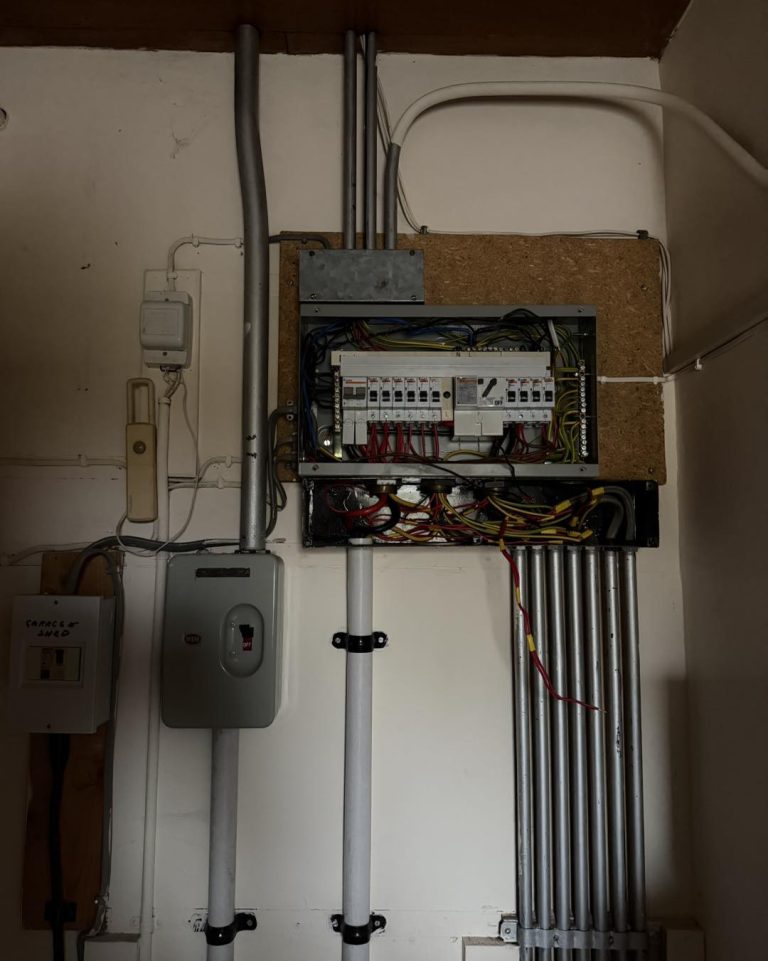
If you’re considering a full house rewire, you probably have a few questions.
What actually happens during a rewire? How long will it take? Will your walls need to be opened up? And what condition will your home be left in afterwards?
At Seamill Electrics, we specialise in full house rewires across Ayrshire, helping homeowners replace outdated electrical installations with safe, modern systems designed for years of reliable use.
In this guide, we’ll walk you through the rewiring process, from the initial survey to the final electrical safety certificate.
What Happens During a Full House Rewire?
A full house rewire involves replacing the existing electrical wiring and associated circuits throughout a property.
This typically includes new socket and lighting circuits, a modern consumer unit, upgraded protective bonding and any additional electrical supplies required for modern appliances.
The process usually follows six main stages.
Step 1: Electrical Survey and Planning
Before any work begins, we’ll assess your existing electrical installation and discuss what you need from your new system.
We’ll consider:
- The age and condition of your existing wiring
- The number and position of sockets and switches
- Kitchen appliances and dedicated circuits
- Lighting layouts
- Smoke and heat alarms
- Future requirements, including EV charging or solar panels
This allows us to plan the installation properly and provide a clear quotation.
Step 2: Preparing Your Home for a Rewire
Rewiring involves accessing walls, floors and ceilings, so some preparation is necessary.
We generally recommend moving furniture away from working areas, protecting valuable belongings and ensuring access to cupboards, loft spaces and floorboards.
An empty property is usually easier to rewire, but occupied homes can also be accommodated with careful planning.
Step 3: First Fix – Installing the New Wiring
The first fix is typically the most disruptive stage.
Our electricians create cable routes, chase walls where necessary and install new wiring throughout the property.
This includes wiring for sockets, switches, lighting, kitchen appliances and other electrical equipment.
During this stage, sections of flooring may be lifted and walls opened to allow cables to be installed safely.
Step 4: Second Fix – Sockets, Switches and Consumer Unit
Once the wiring is in place, the next stage involves fitting the electrical accessories and connecting the new circuits.
Depending on the project, this can include:
- New sockets and switches
- LED lighting and ceiling fittings
- A Hager consumer unit with RCBO protection
- Surge protection
- Interlinked smoke and heat alarms
- Dedicated kitchen and shower circuits
Everything is installed according to the agreed electrical layout.
Step 5: Plastering and Making Good
One of the biggest concerns homeowners have is what happens to their walls afterwards.
At Seamill Electrics, we regularly coordinate plastering as part of our rewire projects, making good the chases created during installation.
We also arrange waste removal where included in the project, leaving the property ready for final decoration.
Step 6: Electrical Testing and Certification
Once the installation is complete, the new circuits undergo electrical inspection and testing.
This verifies that the installation meets the applicable requirements of BS 7671 Wiring Regulations.
You’ll receive the appropriate electrical installation certification, providing a record of the completed work.
How Long Does a Full House Rewire Take in Ayrshire?
Many straightforward house rewires can be completed in approximately 2–5 working days, although larger properties and more complex installations can take longer.
The timescale depends on factors including:
- Property size and layout
- Whether the house is occupied
- Access beneath floors and above ceilings
- The number of circuits and electrical accessories
- The amount of making good required
We’ll discuss the expected programme during your survey so you can plan around the work.
Can You Stay in Your House During a Rewire?
Sometimes, yes.
However, a full rewire involves dust, noise, temporary power interruptions and restricted access to certain rooms.
For some homeowners, staying elsewhere during the most disruptive stages is the more comfortable option.
We’ll explain what to expect before work begins and help you decide what’s practical for your circumstances.
Full House Rewires Across Ayrshire
From cottages in Fairlie and family homes in West Kilbride to flats in Ardrossan and period properties in Saltcoats, Seamill Electrics has experience rewiring a wide range of Ayrshire homes.
We’re proud to have been named Scotland’s Best Electrical Contractor 2025 at the Scottish Home Improvement Awards.
If you’re planning a rewire in Ayrshire, contact our team to arrange a free home survey and quotation.
Call 07710 986491 or visit seamillelectrics.com.
Frequently Asked Questions About House Rewires
Do electricians remove all the old wiring during a rewire?
Accessible redundant wiring is generally removed where practical. Some disconnected cables may be left safely concealed where removing them would cause unnecessary damage.
Will my electricity be switched off during a rewire?
Yes. Electricity must be isolated during certain stages of the work. The duration and frequency of interruptions depend on the installation and how the project is organised.
Do I need to redecorate after a house rewire?
Usually, some redecoration is required where walls have been chased or surfaces disturbed. Plastering can make these areas ready for painting or wallpapering once sufficiently dry.
Can I choose where my new sockets and switches go?
Absolutely. A full rewire is an excellent opportunity to improve your home’s electrical layout, adding sockets and lighting where they’re most useful.
Does a full house rewire include a new fuse box?
A full rewire will commonly include a new consumer unit, with modern protective devices selected to suit the installation.

